More Than After School: How Destination Imagination Complements the Classroom
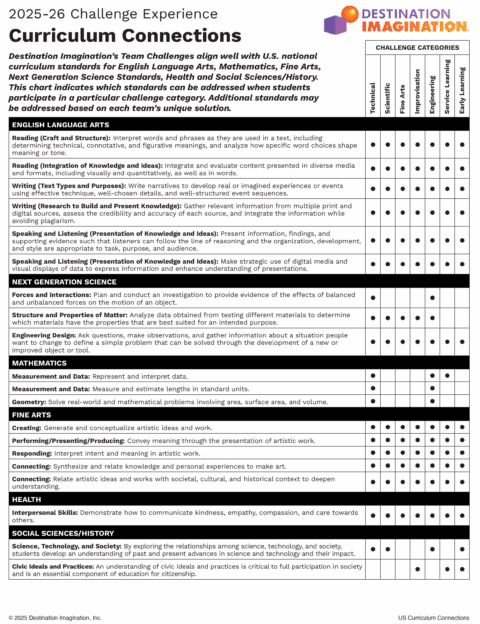
Today’s students are learning more than ever—but learning isn’t limited to textbooks and tests. Enter Destination Imagination (DI), a one-of-a-kind extracurricular activity that perfectly complements school curriculum by reinforcing critical skills in a dynamic, hands-on way.
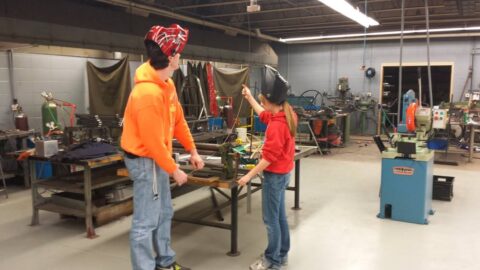
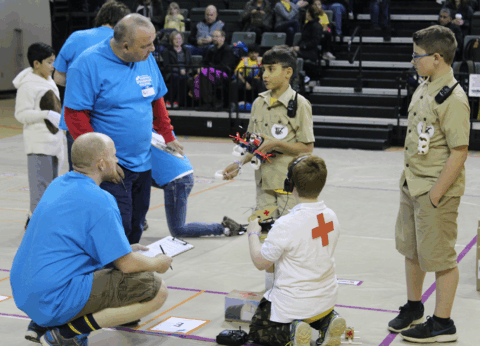
Whether students are exploring literature, math, science, or the arts during the school day, DI gives them the chance to put that knowledge to work in the real world—creatively and collaboratively.
🔍 Real-World Learning That Builds on School Subjects
At first glance, Destination Imagination may look like a fun after-school program filled with costumes, cardboard creations, and a lot of laughter (which it is!). But dig a little deeper, and you’ll find academic connections at every turn:
-
Science & Engineering: Technical and Scientific Challenges encourage students to experiment, test hypotheses, and build functional devices—just like in the classroom, but with more freedom and flair.
-
Math & Logic: From budgeting and time management to measurements and structure stability, DI teams apply practical math to solve complex problems.
-
Language Arts: Storytelling and improvisational Challenges allow students to explore narrative structure, vocabulary, and performance—all in their own words.
-
Visual & Performing Arts: Many Challenges include set design, costumes, props, and acting—helping students express ideas artistically while practicing public speaking and collaboration.
🤝 Soft Skills You Can’t Learn From a Textbook
While DI reinforces academic knowledge, it’s the soft skills that really set it apart. Students learn how to:
-
Work effectively in a team
-
Think critically and creatively
-
Manage time and resources
-
Communicate clearly and confidently
-
Persist through setbacks and challenges
These are exactly the kinds of competencies that educators and employers say are essential for success in school and in life.
🧩 A Bridge Between School and the “Real World”
Think of Destination Imagination as a lab for life skills. Students are challenged to create solutions under constraints—limited time, budget, and materials. It mirrors real-world scenarios while giving students the freedom to try, fail, adapt, and succeed.
Unlike classroom assignments, there’s no “right answer.” Teams must generate original solutions—teaching initiative, ownership, and problem-solving in a way that’s hard to replicate in traditional academic settings.
🏫 Supported by Educators, Loved by Students
Many teachers and administrators actively support DI because they see how it strengthens classroom learning. Students often become more engaged, curious, and confident—traits that carry back into their daily academic work.
And students? They love it. DI gives them a place to explore their interests, lead projects, and be themselves—without the pressure of grades or competition for perfection.
Final Thoughts: Learning That Sticks
When students apply what they learn in school to solve imaginative, team-based Challenges, the knowledge sticks. They don’t just memorize—they internalize. That’s what makes Destination Imagination such a valuable extracurricular activity.
It’s fun. It’s challenging. It’s educational. And best of all—it prepares students for whatever comes next.
Ready to bring DI to your school or community? Contact Wisconsin Destination Imagination (WIDI) or visit DestinationImagination.org.
Recent Posts